




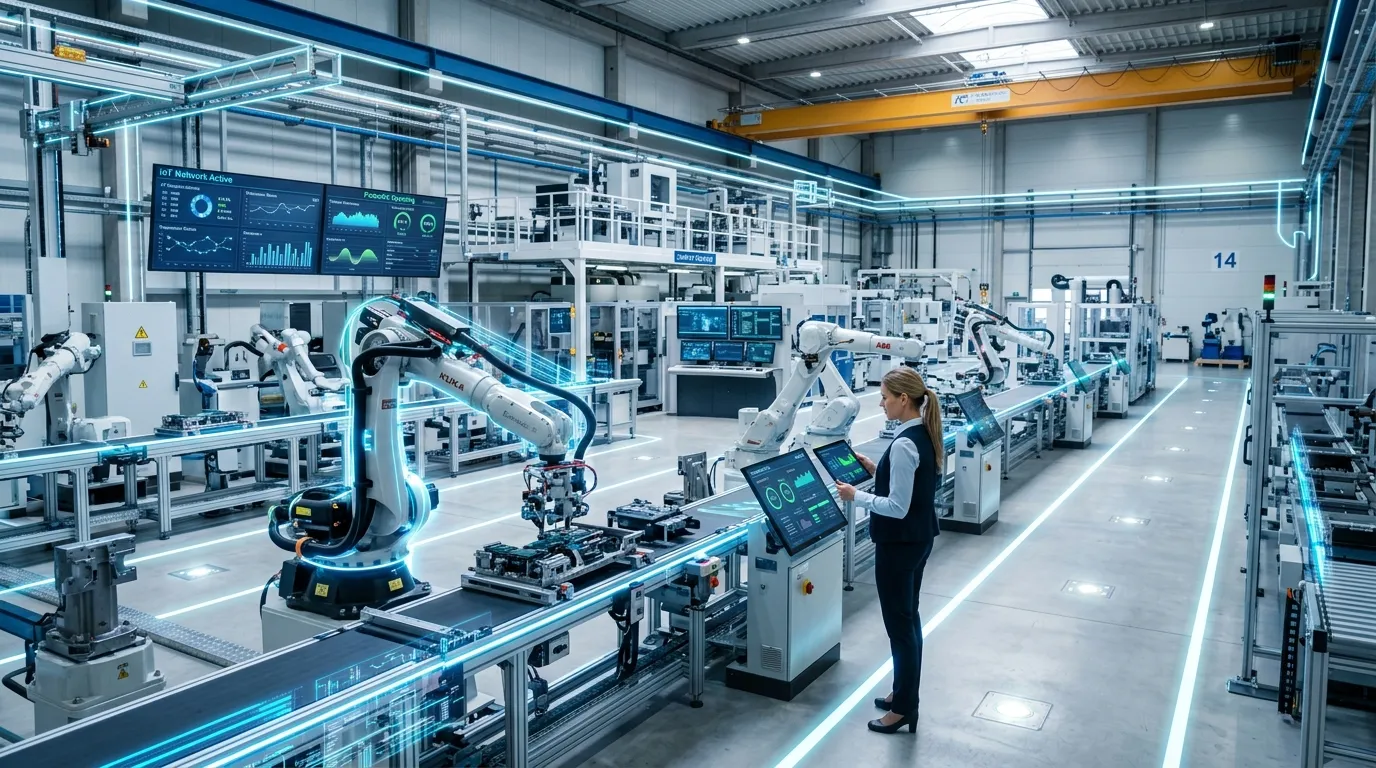
Industry 4.0 is also called the fourth industrial revolution. It means bringing digital technologies into traditional industrial production. This makes factories smarter, and production is optimized with the Internet of Things (IoT), artificial intelligence (AI), big data analytics and other advanced technologies.
The Core Elements of Industry 4.0
The core elements of Industry 4.0 include smart manufacturing, cyber-physical systems, cloud computing, big data analytics, artificial intelligence and 3D printing. Together they optimize production and make the production environment more flexible.
Why Industry 4.0 Matters and What It Changes
Industry 4.0 is changing production in many sectors. Compared with traditional methods, it brings higher efficiency, flexibility and quality. Human-robot collaboration also improves workplace safety and working conditions. At the same time, Industry 4.0 brings major changes to workforce skills and to the way work is done.
Industry 4.0 Technologies and Where They Are Used
The technologies behind Industry 4.0 are used in many different areas. For example, smart sensors and IoT optimize the monitoring and maintenance of production equipment, while artificial intelligence and big data analytics support data-driven decisions that raise production efficiency.
Advantages and Challenges of Industry 4.0
The advantages of Industry 4.0 include higher efficiency, flexibility and competitiveness. The transformation also brings some challenges. Integration with existing infrastructure and data security in particular need attention when moving to Industry 4.0:
Advantages of Industry 4.0:
- Higher Efficiency: smarter production processes deliver higher efficiency.
- Flexibility and Adaptation: production becomes flexible and can adapt quickly to changes in demand and the market.
- Better Quality and Safety: more precise production and human-robot collaboration raise quality and workplace safety.
- Higher Customer Satisfaction: faster response to customer requests and the option to offer personalized products and services.
- Innovation and Competitiveness: new technologies allow products and processes to be improved continuously.
- Sustainability: more efficient use of resources and production that does less harm to the environment support sustainability goals.
Challenges of Industry 4.0:
- Investment Cost: moving to Industry 4.0 takes a significant investment and needs budget planning.
- Workforce Skills: the gap between traditional workforce skills and digital technologies calls for staff training and time to adapt.
- Data Security Risks: more data sharing and more digital connections make stronger cybersecurity measures necessary.
- Adapting Infrastructure: making existing infrastructure compatible with Industry 4.0 technologies needs step-by-step planning.